CORPORATE »
You can check out this page to learn more about us.

You can find detailed information about our work and the sectors in which we work in this section.
You can view all products offered by Coral on this page...
You can view all services offered by Coral on this page...
CENTER OFFICE
Nispetiye Mahallesi Nispetiye Caddesi.
No:24 İç Kapı No: 17 Beşiktaş
İstanbul Türkiye
PRODUCTION FACILITY
Köseköy, Çuhane Caddesi
No:181/4, 41250 Kartepe
Kocaeli Türkiye

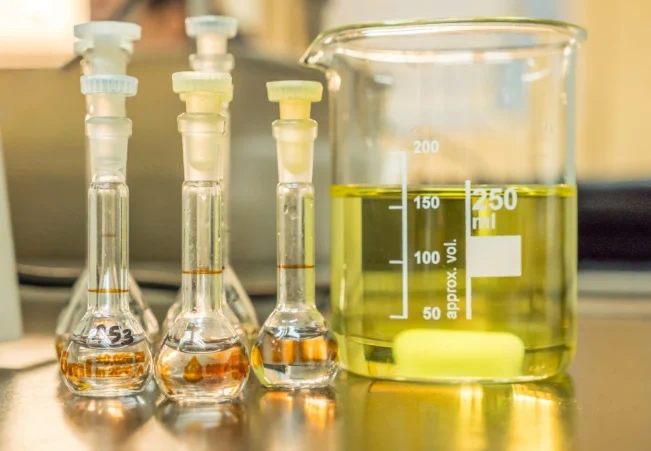
Phase Change Materials (PCMs) are substances that absorb and release thermal energy during the process of melting and solidifying (known as latent heat). When a material melts, it transitions from a solid to a liquid state. During this phase change, many materials are capable of absorbing a significant amount of heat energy. Conversely, when the material freezes and solidifies, it releases the same amount of heat it previously absorbed. Different materials melt and solidify at different temperatures and can absorb varying amounts of thermal energy.
Because PCMs melt and solidify at specific, defined temperatures, they are particularly useful for temperature control in a wide range of applications. Materials that melt to absorb heat are significantly more efficient in storing thermal energy compared to sensible heat storage materials. This means that a much smaller volume of PCM is required to store the same amount of heat energy as a non-phase-changing material.
A PCM functions through two distinct forms of thermal energy: latent heat and sensible heat.
Latent heat is the amount of energy required for a substance to transition from one phase to another — for instance, from a liquid to a solid. A common example is an ice cube, which utilizes its latent heat capacity to absorb thermal energy from a beverage. The melting of the ice cube indicates that it has absorbed the maximum amount of latent heat.
On the other hand, sensible heat is the energy required to change a material's temperature without changing its phase. An example of this is a water heater. When latent and sensible heat work together, they can help maintain a specific desired temperature for extended periods of time.
Importantly, PCM products are designed to last throughout the lifetime of the product or application in which they are used. The phase transition temperature and latent heat capacity should remain consistent through repeated melting and solidification cycles. Additionally, PCMs are encapsulated within a shell to prevent leakage, degradation, or contamination.
To support the goal of reducing energy consumption in buildings, several innovative technologies have emerged. Some of these focus on the application of thermal insulation materials to the building envelope. PCMs utilize the Latent Heat Thermal Storage (LHTS) principle to absorb large amounts of energy when it is in excess and release it when there is a shortage. Proper implementation of PCMs can reduce peak heating and cooling loads, thereby lowering overall energy use.
An additional benefit of PCM application is the ability to maintain a more comfortable indoor environment due to reduced temperature fluctuations. There are numerous potential areas where PCMs can be applied in building environments. To date, these include ventilation systems, passive heating and cooling systems, flooring, roofing, and wall claddings. Moreover, PCMs can be directly integrated into construction materials such as concrete and drywall panels, allowing their use in structures with minimal modifications to the original design.
 ABOUT US
 QUALITY
 INNOVATION
 ANIMAL HEALTH
 INFORMATION TECHNOLOGIES
 THERMAL SOLUTIONS
 ADJUVANTS
 IMMERSION COOLING SYSTEMS
 BIOTECHNOLOGY LABORATORY
 TECHNICAL SUPPORT
 PRODUCTION SERVICES
 NEWS
NEWS
 PUBLICATIONS